Last updated: July 2, 2026
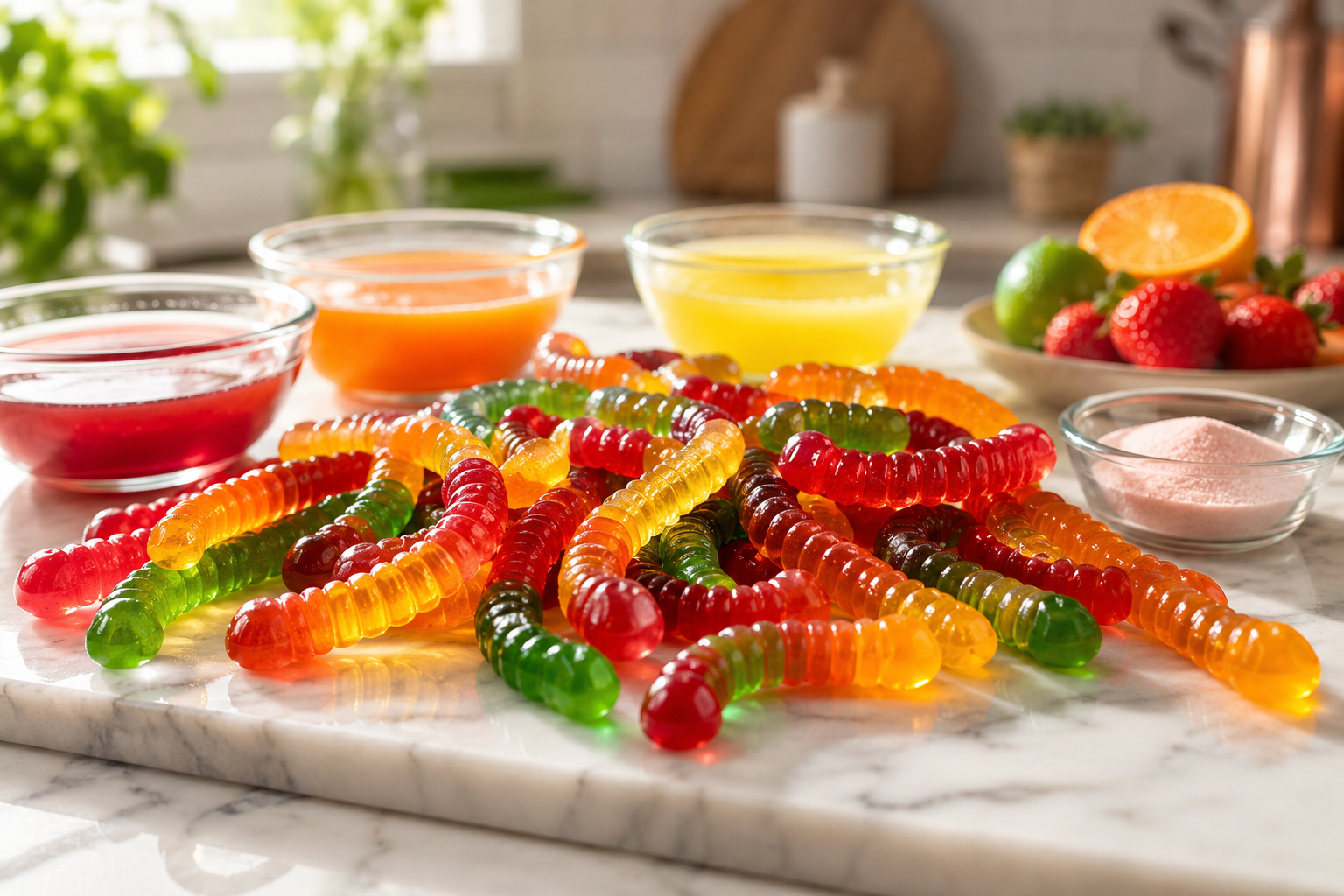
Quick Answer: A basic gummy worm recipe combines fruit juice or flavored gelatin with unflavored gelatin, a sweetener, and optional citric acid, then sets the mixture in worm-shaped molds or straws. The process takes about 15 minutes of active prep and 1 to 2 hours of refrigeration. Anyone can make chewy, flavorful gummy worms at home with a few pantry staples and no special equipment.
Key Takeaways
- The core ingredients for a gummy worm recipe are gelatin, a liquid (juice or water), sweetener, and flavoring.
- Unflavored gelatin produces firmer worms; agar-agar is the plant-based alternative but sets harder and less chewy.
- Silicone worm molds give the cleanest results, but drinking straws work as a free substitute.
- Total time from prep to finished candy is roughly 1.5 to 2 hours, including chilling.
- Sugar-free versions use sugar-free flavored gelatin or electrolyte powders instead of sugar and corn syrup.
- Adding a small amount of cooking oil to the molds prevents sticking without affecting flavor.
- Citric acid or lemon juice creates a sour coating similar to commercial sour gummy worms.
- Homemade gummy worms store well in an airtight container in the refrigerator for up to two weeks.
- Common mistakes include using too little gelatin (soft worms), not blooming gelatin properly, or overheating the mixture.
- Natural colorants like fruit purees and spirulina powder replace artificial dyes without sacrificing vibrancy.
What Ingredients Do You Need for Gummy Worms
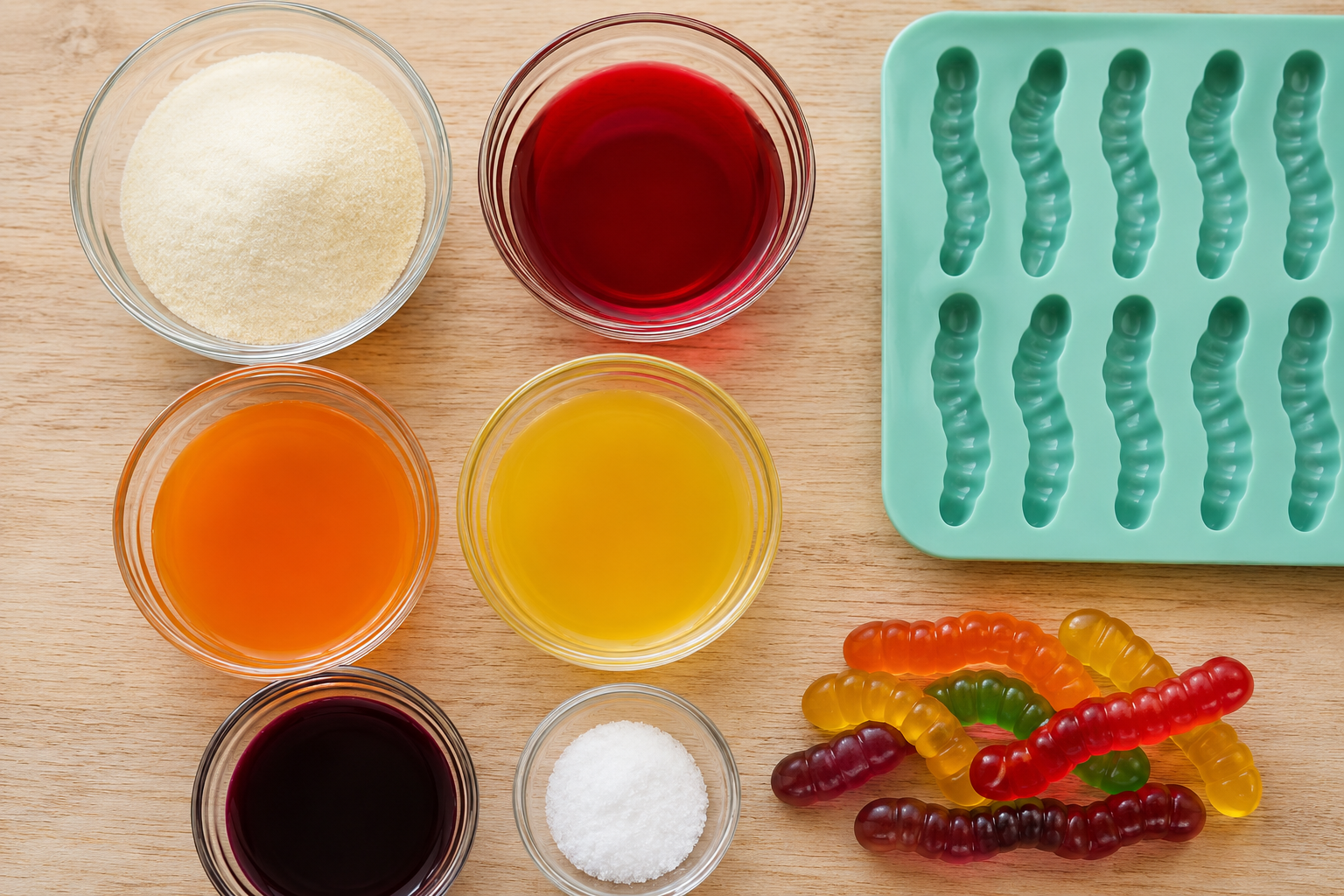
A complete gummy worm recipe requires six core components: a liquid base, unflavored gelatin, a sweetener, flavoring, an optional acid for sourness, and a light coating to prevent sticking.
Core ingredients (makes approximately 50 to 60 worms):
| Ingredient | Amount | Purpose |
|---|---|---|
| Fruit juice or water | 1/2 cup | Liquid base and flavor |
| Unflavored gelatin | 3 to 4 packets (21–28g) | Structure and chew |
| Sugar or honey | 2 to 3 tbsp | Sweetness |
| Flavored gelatin (optional) | 1 small box (85g) | Added flavor and color |
| Citric acid | 1/4 tsp | Sour finish |
| Light cooking oil or wax | Thin coat | Anti-stick |
For a more intense flavor, simmer 1 cup of juice down to about 1/3 cup before mixing in the gelatin. This concentrates the natural sugars and fruit notes significantly [2]. Corn syrup is common in commercial recipes to add chew and prevent crystallization, but it is not required for a home version.
Gummy Worm Recipe with Gelatin vs. Agar
Gelatin and agar-agar both set a gummy worm recipe, but they produce noticeably different textures. Gelatin (derived from animal collagen) creates the soft, stretchy chew associated with store-bought gummy worms. Agar-agar (a seaweed extract) sets firmer and more brittle, making it suitable for vegan recipes but less ideal for a classic chewy texture [1].
Key differences:
- Gelatin: Sets at refrigerator temperature, melts when warm, produces a bouncy and elastic texture.
- Agar-agar: Sets at room temperature, stays firm even at slightly warmer temperatures, produces a firmer, more jelly-like bite.
If using agar-agar, reduce the quantity by roughly 25 to 30 percent compared to gelatin, and expect a candy that holds its shape better in warm weather but lacks the classic stretch. For most home bakers following a standard gummy worm recipe, gelatin is the better choice.
How to Make Gummy Worms at Home
Making a gummy worm recipe at home follows a straightforward five-step process. The most important rule is to bloom the gelatin in cold liquid first, then gently heat it to dissolve completely without boiling.
Step-by-step instructions:
- Bloom the gelatin. Pour 1/2 cup of cold fruit juice into a small saucepan. Sprinkle 3 to 4 packets of unflavored gelatin over the surface and let it sit for 5 minutes without stirring.
- Heat gently. Warm the pan over low heat, stirring constantly until the gelatin fully dissolves. Do not boil. If using flavored gelatin, stir it in at this stage.
- Add sweetener and acid. Stir in sugar or honey and a pinch of citric acid. Taste and adjust.
- Add color. Stir in a few drops of food coloring or a small amount of fruit puree for natural color [5].
- Fill molds and chill. Pour or pipe the mixture into silicone worm molds or prepared straws. Refrigerate for 1 to 2 hours until fully set, then unmold and coat lightly with oil or a citric acid-sugar mixture.
Total active prep time: approximately 15 minutes. Total time including chilling: 1.5 to 2 hours.
Best Piping Method for Gummy Worm Shapes
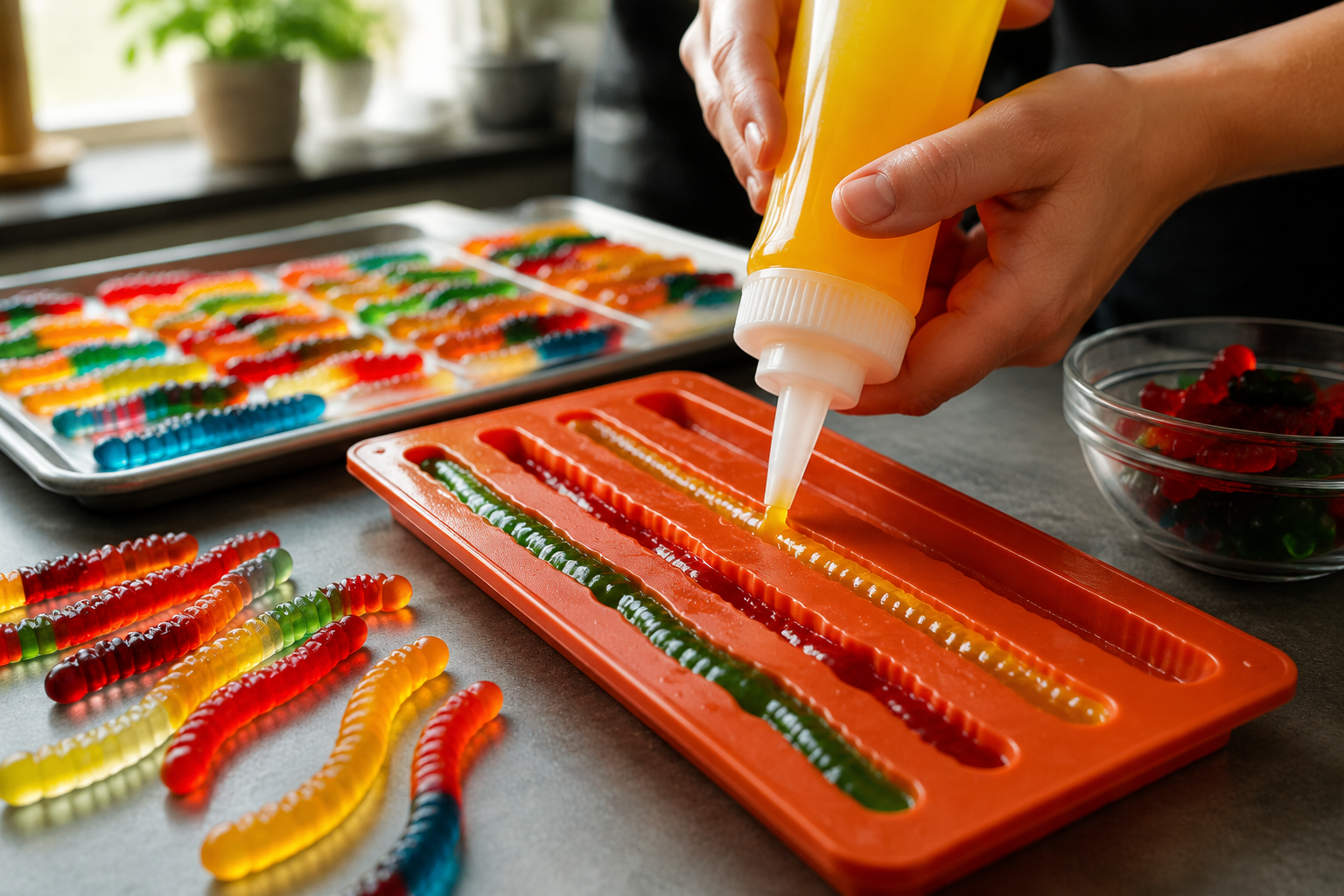
The best piping method depends on the tools available. A silicone worm mold paired with a small squeeze bottle or a zip-lock bag with one corner snipped off gives the most consistent results. For a no-mold approach, plastic drinking straws work well [9].
Straw method: Fill straws with the warm gelatin mixture using a squeeze bottle or syringe. Stand straws upright in a tall glass and refrigerate until set. To release the worms, hold one end and push through with a thin skewer or simply squeeze from the bottom.
Silicone mold method: Lightly coat the mold cavities with a neutral oil spray. Fill each channel to the top using a piping bag or squeeze bottle. Tap the mold gently on the counter to release air bubbles, then refrigerate.
The straw method is ideal for kids’ activities because it requires no special purchases. The silicone mold method is faster for large batches.
Gummy Worm Recipe Without Corn Syrup
A gummy worm recipe without corn syrup is easy to make and still produces a satisfying chew. Corn syrup adds softness and prevents sugar from crystallizing, but honey, agave syrup, or simply a higher ratio of gelatin to liquid can replicate those effects.
Replace 2 tablespoons of corn syrup with an equal amount of honey or agave. The flavor will shift slightly (honey adds a floral note), but the texture remains close to the original. Adding one extra half-packet of gelatin also firms up the worm enough to compensate for the missing corn syrup.
Can You Use Food Coloring in Gummy Worms
Yes, both artificial food coloring and natural colorants work well in a gummy worm recipe. A few drops of gel food coloring added to the warm gelatin mixture produces vivid, even color throughout the candy.
For natural alternatives, fruit purees and plant-based powders are effective:
- Red or pink: Raspberry puree or beet powder
- Green: Matcha powder or spirulina [5]
- Yellow/orange: Turmeric or mango puree
- Purple: Blueberry or blackcurrant juice
Natural colorants tend to produce softer, more muted tones than artificial dyes. They also add a subtle flavor, which can complement or compete with the main flavoring, so test small batches first.
Gummy Worm Recipe for Kids Activities
A gummy worm recipe is one of the most accessible candy-making projects for children. The process involves no sharp tools, no high-heat frying, and results in an edible reward, making it a popular activity for school events, birthday parties, and rainy-day projects.
Tips for kids’ gummy worm projects:
- Use the straw method so each child can make their own batch with minimal equipment.
- Pre-measure ingredients into small cups before starting to keep the process smooth.
- Choose bright, contrasting colors (red and green, orange and blue) for visual excitement.
- Let kids mix in their own flavoring choices, such as strawberry, watermelon, or grape juice.
- For a themed activity, pair finished gummy worms with chocolate pudding “dirt cups” for a classic worm-in-dirt dessert [10].
Can You Make Sugar-Free Gummy Worms
Sugar-free gummy worms are straightforward to make using sugar-free flavored gelatin and unflavored gelatin as the base. This version suits people managing blood sugar levels, following low-carb diets, or simply reducing sugar intake [3].
Basic sugar-free formula:
- 1 small box sugar-free flavored gelatin
- 2 packets unflavored gelatin
- 1/2 cup cold water
For a keto version, replace flavored gelatin with unflavored gelatin and use electrolyte powder for both flavor and sweetness. This approach produces a zero-carb snack with added sodium, potassium, and magnesium, making it useful for athletes or anyone following a strict low-carb plan [4].
Note: Sugar-free gummy worms made with sugar alcohols (found in some sugar-free gelatins) may cause digestive discomfort in large quantities. If you’re exploring supplements or dietary adjustments alongside your diet, reviewing a guide on using vitamins and supplements as a treatment can help put dietary choices in broader context.
Gummy Worm Recipe with Oil vs. Without
A small amount of oil in a gummy worm recipe serves one purpose: preventing the finished worms from sticking together or to the mold. It does not affect flavor or chew when used correctly.
With oil: After unmolding, toss finished gummy worms in a light coating of neutral oil (such as coconut or vegetable oil). This replicates the shiny, non-sticky surface of commercial gummy candy [1]. Alternatively, lightly spray mold cavities before filling.
Without oil: Skip the oil entirely if the gummy worms will be coated in a citric acid-sugar mixture for a sour finish. The dry coating prevents sticking just as effectively and adds a tangy flavor layer.
Choose oil if you want a classic shiny gummy worm. Choose the dry coating if you prefer sour gummy worms.
Why Are My Homemade Gummy Worms Too Soft
Soft or runny homemade gummy worms almost always result from too little gelatin, insufficient chilling time, or a liquid-to-gelatin ratio that is off. Each of these is easy to fix.
Common causes and fixes:
- Too little gelatin: Use at least 3 full packets (21g) per 1/2 cup of liquid. For firmer worms, increase to 4 packets.
- Gelatin not fully bloomed: Always let gelatin sit in cold liquid for at least 5 minutes before heating. Rushing this step leaves undissolved granules that weaken the final set.
- Mixture overheated: Boiling breaks down gelatin’s setting ability. Keep heat low and steady.
- Not chilled long enough: One hour is the minimum; two hours produces a more reliable set.
- Too much acid: Large amounts of citric acid can interfere with gelatin’s structure. Keep citric acid under 1/2 teaspoon per batch.
Common Mistakes When Making Gummy Worms at Home
Beyond soft texture, several other mistakes trip up first-time gummy worm makers.
- Skipping the bloom step: Adding gelatin directly to hot liquid prevents proper hydration and produces a grainy or uneven texture.
- Filling molds while the mixture is too cool: The mixture thickens quickly. Work fast and keep it warm over a very low burner while filling molds.
- Using too much food coloring: Gel colors are concentrated. Start with one or two drops and build up gradually.
- Not greasing the molds: Even silicone molds benefit from a light oil spray, especially for intricate shapes.
- Storing at room temperature too soon: Freshly made gummy worms need full refrigeration before they can be stored at room temperature. Skipping this step causes them to lose shape.
How to Store Homemade Gummy Worms
Homemade gummy worms store best in an airtight container in the refrigerator, where they stay fresh for up to two weeks. At room temperature, they last 3 to 5 days if kept away from heat and humidity.
Storage tips:
- Layer worms between sheets of parchment paper to prevent sticking.
- Toss with a light coating of oil or cornstarch before storing to maintain separation.
- Avoid storing near heat sources or in direct sunlight, as gelatin softens and the worms will lose their shape.
- Do not freeze homemade gummy worms. Freezing changes the texture, making them weep moisture and become sticky when thawed.
Difference Between Gummy Worms and Gummy Bears
Gummy worms and gummy bears share the same base recipe: gelatin, sugar, flavoring, and coloring. The differences are shape, size, and often flavor profile [1].
- Gummy bears are small, compact, and typically single-flavored.
- Gummy worms are longer, often two-toned (two flavors in one piece), and sometimes coated in a sour sugar mixture.
- Texture: Gummy worms are often slightly softer than gummy bears because their elongated shape requires a lower gelatin concentration to unmold cleanly without breaking.
For a two-toned gummy worm, pour one color into the mold first, let it partially set for 10 to 15 minutes, then add the second color on top.
FAQ
How much gelatin do I need per batch of gummy worms?
Use 3 to 4 standard packets (7g each, totaling 21 to 28g) of unflavored gelatin per 1/2 cup of liquid. More gelatin produces firmer, more commercial-style worms.
Can I use flavored gelatin instead of unflavored?
Yes. One small box of flavored gelatin combined with 1 to 2 packets of unflavored gelatin per 1/2 cup of water produces a flavorful, well-set gummy worm without needing additional sweetener.
Do I need silicone molds to make gummy worms?
No. Plastic drinking straws filled with the gelatin mixture and refrigerated until set work as a free alternative. Push the set worms out with a skewer or gentle pressure.
How do I make sour gummy worms?
Mix 1 tablespoon of citric acid with 2 tablespoons of sugar. After unmolding and coating the worms lightly in oil, toss them in the citric acid-sugar mixture for a sour finish.
Can I use agar-agar for a vegan gummy worm recipe?
Yes, but expect a firmer, less chewy texture. Use about 1 teaspoon of agar powder per 1 cup of liquid, adjusting to taste. Agar sets at room temperature and does not require refrigeration to firm up.
Why do my gummy worms taste bland?
Bland gummy worms usually result from using plain water instead of juice, or from not concentrating the juice enough. Simmer juice down to one-third of its original volume before adding gelatin to intensify flavor.
Can I add vitamins or supplements to gummy worms?
Some home cooks add powdered supplements to gummy worm mixtures. However, heat can degrade certain vitamins, and dosing accuracy is difficult in homemade candy. For supplement guidance, consult a health professional and review reliable resources on using vitamins and supplements as a treatment.
How long do homemade gummy worms last?
Refrigerated in an airtight container, homemade gummy worms last up to two weeks. At room temperature, plan to consume them within 3 to 5 days.
Can children help make gummy worms?
Yes. The straw-filling method is safe for children under adult supervision. The main hazard is the warm gelatin mixture, so adults should handle the heating step while children fill and decorate.
What is the best fruit juice for gummy worms?
Apple, grape, cranberry, and orange juices all work well and produce vibrant colors naturally. Pineapple and kiwi juice contain enzymes (bromelain and actinidin) that break down gelatin, so avoid them unless the juice has been heated to deactivate the enzymes.
Conclusion
A well-executed gummy worm recipe is one of the most satisfying home candy projects: the ingredients are inexpensive, the process is forgiving once the gelatin ratio is understood, and the results are genuinely better than most store-bought versions in terms of freshness and customization.
Actionable next steps:
- Start with the basic recipe using fruit juice and 3 to 4 gelatin packets to establish a baseline texture.
- Experiment with natural colorants like spirulina or beet powder on a second batch.
- Try the sugar-free version if dietary needs require it, using sugar-free flavored gelatin as the flavor base.
- Use the straw method for a kids’ activity, then upgrade to silicone molds for larger or more uniform batches.
- Store finished worms in the refrigerator with parchment layers and a light oil coating for the best shelf life.
Once the core technique is solid, the flavor and format options are nearly limitless, from mango-chili worms dusted with chili-lime seasoning [6] to electrolyte-infused worms for post-workout snacking [8]. The gummy worm recipe is a foundation, not a formula.
References
[1] Gummy Worms – https://en.wikipedia.org/wiki/Gummy_worms?utm_source=openai
[2] Oj3hletjgjboofgw6rot – https://www.umami.recipes/uk/recipe/Oj3hleTjgjBoofGw6Rot?utm_source=openai
[3] Sugar Free Gummy Worms 75525 – https://www.food.com/recipe/sugar-free-gummy-worms-75525?utm_source=openai
[4] Keto Gummy Worms – https://www.ketofocus.com/recipes/keto-gummy-worms/?utm_source=openai
[5] Homemade Gummy Worms – https://foodsocial.io/recipe/homemade-gummy-worms/?utm_source=openai
[6] Mango Tajin Gummy Worms – https://www.lorannoils.com/blogs/recipe/mango-tajin-gummy-worms?utm_source=openai
[7] Gummy Worm Ice Pops 8344923 – https://www.foodnetwork.com/recipes/giada-de-laurentiis/gummy-worm-ice-pops-8344923?utm_source=openai
[8] Electrolyte Gummy Worms – https://www.shopflavcity.com/blogs/recipes/electrolyte-gummy-worms?utm_source=openai
[9] Diy Gummy Worms 481521 – https://www.food.com/recipe/diy-gummy-worms-481521?utm_source=openai
[10] Gummy Worm Jello Cups Recipe – https://cupofyum.com/recipes/gummy-worm-jello-cups-recipe?utm_source=openai
Meta Title: Gummy Worm Recipe: How to Make Homemade Gummy Worms
Meta Description: Learn how to make a gummy worm recipe at home with gelatin, fruit juice, and simple tools. Includes sugar-free, vegan, and kids’ activity versions.
Tags: gummy worm recipe, homemade gummy worms, gelatin candy, sugar-free gummy worms, gummy worm molds, DIY candy, fruit gummy worms, keto gummy worms, sour gummy worms, kids candy making, agar gummy worms, natural food coloring candy